Beyond the Banner: Why Safety Week Still Matters
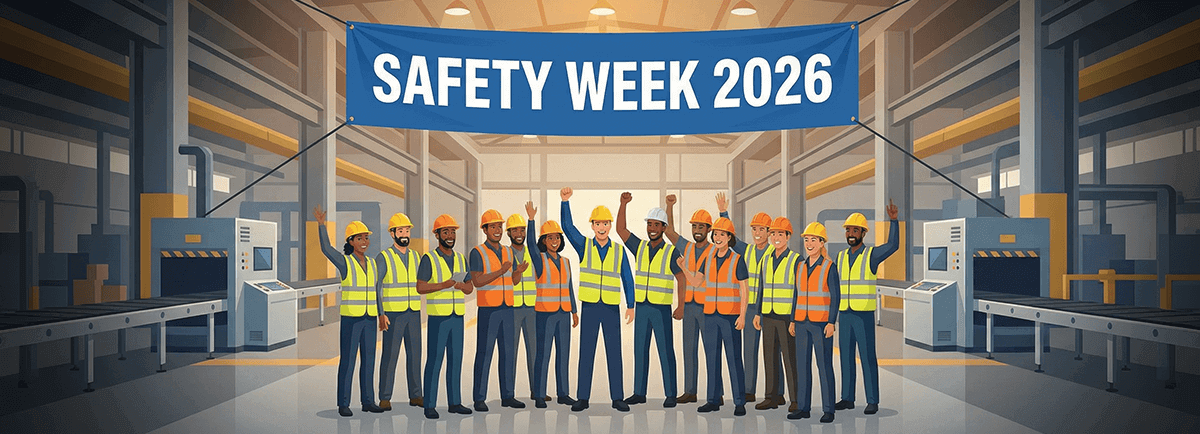
Most safety managers I know are familiar with the drill. The calendar turns to March, and suddenly the office is awash in posters, banners, and slogans. It often feels like a ritual: a predictable week of speeches and specialized training before everyone settles back into their regular routines. But if we treat this week as a simple checkbox exercise, we miss the most significant opportunity of the operational year.
I’ve always believed that safety culture isn’t a static document sitting in a binder on a dusty shelf. It is a living, breathing pulse of the organization. A dedicated safety week acts as a high-voltage jumpstart for that pulse, beginning every March 4th.
Breaking the Cycle of Complacency
To me, the biggest threat in any industrial environment isn’t a lack of rules: it is the “invisible” hazard of habit. When your team performs the same task hundreds of times without incident, the brain naturally begins to filter out risk. Complacency is a biological response to repetition.
A focused safety week disrupts this cycle. It forces a collective “stop-and-think” moment. By stepping away from the daily grind for focused discussions, workers begin to see their environment with fresh eyes. They notice the worn cable or the slightly obstructed walkway they had been walking past for months.
The Psychology of Shared Responsibility
Safety excellence happens when the hierarchy of a company flattens. During this week, I like to see the barrier between the boardroom and the shop floor disappear. When leadership engages directly with frontline operators about their daily hazards, real trust is built.
It is a time for active listening rather than just lecturing. Employees who see their suggestions turned into actual site improvements become the strongest advocates for safety. This transition from “being told to be safe” to “choosing to be safe” is the hallmark of a mature safety culture.
| Feature | Old-School Safety Week | Modern Safety Culture Week |
|---|---|---|
| Focus | Compliance & Posters | Engagement & Empowerment |
| Communication | Top-down Lectures | Two-way Dialogue |
| Result | Short-term Spike | Long-term Cultural Shift |
Education Beyond the Classroom
Training often feels like a chore, but safety week allows for a shift in how we learn. Instead of dry slides, this week should be about practical, high-impact education.
- Hands-on Demonstrations: Testing equipment in a controlled environment.
- Case Studies: Discussing real-world near-misses and how they were prevented.
- Toolbox Conversations: Short, informal sessions that tackle one specific risk per day.
Modern tools help us sustain this education. While traditional posters serve as a reminder, digital systems allow teams to carry that safety knowledge in their pockets through mobile inspections and instant reporting.
Driving Action through Empowerment
I believe the most successful safety weeks end with employees feeling empowered. This means giving every individual the authority to halt work if they perceive an immediate threat. It is about moving from a reactive “accident investigation” mindset to a proactive “hazard identification” mindset.
When workers have the right digital tools to log a concern in seconds, the friction of reporting disappears. That empowerment leads to a steady stream of data that prevents the next big incident.
Actionable Steps for a Better Safety Week
- Walk the Talk: Ensure senior management is visible on the floor every day of the week.
- Gamify the Learning: Use quizzes or hazard-spotting challenges to keep engagement high.
- Celebrate the Wins: Recognize individuals or teams who have gone a year without a reportable incident.
- Digitize the Feedback: Provide an easy, non-punitive way for staff to report near-misses during the week
Maintaining the Momentum
The true test of a safety week isn’t how many people attended the final lunch. It is whether the site is safer six months later.
At Safetymint, we remain committed to this long-term vision of keeping workplaces safe through our digital solutions. We do this by digitizing core processes like incident reporting and inspections, helping organizations move away from paper-based silos into a transparent, real-time safety environment. This ensures that the lessons we learn during safety week aren’t just remembered, but are acted upon every single day.
This article was generated with the assistance of AI and reviewed by Ramesh Nair for accuracy and quality.

Ramesh Nair is the Founder and Principal Partner of Niyati Technologies, the company behind Safetymint.
He’s a dedicated advocate for workplace safety. Ramesh firmly believes that every individual deserves to return home safely after a day’s work. Safetymint, the innovative safety management software, emerged from this conviction. It’s a platform designed to streamline safety management, empower safety professionals, and enhance safety in workplaces.
Through his blog, Ramesh shares insights, best practices, and innovative solutions for workplace safety. Visit his social media profiles to follow him for regular updates.