
Isolation Management in the Permit to Work Process
A maintenance permit may be approved and ready for work. But if the equipment can still receive electrical power, pressure, steam, chemicals or stored energy, the permit alone cannot protect the people working on it.
This is where isolation management becomes a critical part of the Permit to Work process. It establishes which energy sources must be isolated, how those isolations are verified, and who controls them while the job is underway.
The challenge grows when work crosses shifts, several permits depend on the same isolation, or one team finishes before another. Managing those situations safely requires control of the isolation from shutdown through to eventual re-energization.
A Permit Does Not Isolate Hazardous Energy
A Permit to Work authorizes a defined job under specified conditions. Isolation deals with the physical sources of energy that could make that job unsafe.
Consider maintenance on a process pump.
Switching off the pump at the control panel may stop it running, but the maintenance team may still have to deal with electrical supply, pressure in the line, process fluid, pneumatic systems or stored mechanical energy.
Each relevant source has to be identified and brought to a safe state before work begins.
Depending on the equipment and work involved, this may require electrical disconnection, closing and securing valves, blanking or blinding lines, depressurising equipment, draining process fluids or releasing stored energy.
The permit and the isolation therefore need to remain connected throughout the job. If their status begins to differ, the people carrying out the work may be relying on conditions that no longer exist.
Isolation Management Starts Before the Permit Is Issued
Good isolation management starts with understanding where hazardous energy can come from.

Electrical energy is usually the obvious one. Process equipment can make the picture considerably more complicated.
A vessel may contain pressure even after its inlet has been closed. A hydraulic system can retain pressure. Elevated equipment can move under gravity. Hot surfaces may remain dangerous long after shutdown. Process lines can contain chemicals that need to be drained, vented or physically separated.
The isolation plan should therefore identify:
- The equipment affected by the work
- Relevant energy and process hazards
- The points at which isolation is required
- The method used at each isolation point
- Any stored or residual energy that must be released
- Who is responsible for applying and verifying the isolation
This information needs to match the actual job. Copying the isolation arrangement from a previous permit can be risky when the equipment configuration, scope of work or surrounding operations have changed.
An Isolation Has to Be Verified Before Work Starts
An isolation point being recorded does not automatically mean the equipment is safe to work on.
The isolation has to be applied and then verified using the procedure appropriate to the equipment and hazard involved.
For electrical work, this may include proving that the circuit is de-energized. Process equipment may need pressure gauges checked, lines drained or vents opened. Mechanical systems may require stored energy to be released or moving parts physically secured.
This verification is an important point in the Permit to Work workflow because it separates an intended isolation from one that has actually been established.
The permit should only move to the appropriate work stage once the required isolation conditions have been confirmed.
Shared Isolations Make Permit Control More Complicated
A single maintenance shutdown can generate several permits.
Imagine that an electrical team is working on the motor of a pump while a mechanical team replaces a seal and an inspection team examines part of the connected pipework.
Some isolation points may protect all three jobs. Others may apply to only one.
Now suppose the electrical work finishes first.
Closing that permit should not automatically release an electrical isolation if another active permit still depends on the same isolation. The person authorizing de-isolation needs to know every permit and work group that relies on it.
This is where shared isolation management becomes particularly important.
| Isolation point | Electrical work | Mechanical work | Inspection | Ready for removal? |
|---|---|---|---|---|
| Main electrical supply | Required | Required | No | No |
| Process inlet | No | Required | Required | No |
| Instrument air | Required | No | No | Only after electrical work clears |
On a busy site, these dependencies can become difficult to manage through separate permits, spreadsheets or handwritten isolation registers.
The isolation needs its own controlled status, with clear links to every permit that depends on it.
Shift Changes Can Break the Chain of Control
Many maintenance jobs do not finish within one shift.
The permit may be extended or handed over to another supervisor. Contractors may change. Operations personnel may rotate. The person who originally applied or verified an isolation may no longer be on site.
The equipment, however, remains isolated.
A proper handover should allow the incoming team to establish the current position without relying on verbal recollection. They should be able to see which isolations remain active, why they are required, which permits depend on them and whether anything has changed since the previous shift.
If the scope of work changes, the existing isolation plan should also be reviewed. An isolation designed for one maintenance task may not be adequate for additional work introduced later.
Permit Closure and De-Isolation Are Different Decisions
Finishing a job means the work covered by that permit has been completed. It does not necessarily mean the equipment is ready to be returned to service.
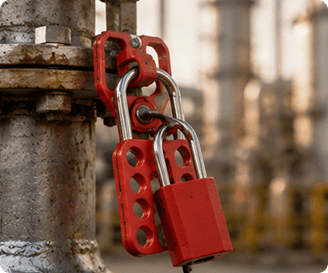
Before removing an isolation, the responsible person needs to confirm that no other active permit still depends on it.
There may also be other checks required before restoration. Tools and temporary equipment may need to be removed. Guards may need to be replaced. Personnel must be clear of the equipment. Valves, breakers and other isolation points need to be restored in the correct sequence.
Only then should controlled de-isolation and re-energization take place.
This becomes especially important during shutdowns and simultaneous operations, where several work groups can be interacting with the same equipment or system.
What Should an Isolation Management System Show?
Whether isolation is managed on paper or through a digital Permit to Work system, the person responsible for the job should be able to establish the current isolation status without reconstructing it from several different records.
Useful information includes:
- Isolation point and equipment identification
- Type and source of hazardous energy
- Isolation method
- Current isolation status
- Date and time applied
- Person responsible for applying or verifying it
- Associated permits
- Other permits sharing the same isolation
- Shift handover history
- Authorization and status of de-isolation
For larger facilities, visual identification can also help. Isolation points can be associated with equipment IDs, drawings or marked locations so that the isolation recorded in the permit can be matched with the correct physical point in the field.
Digital PTW Can Help Keep Isolation and Permit Status Connected
The value of digitising isolation management is not simply replacing an isolation register with an electronic form.
The bigger advantage is maintaining the relationship between the isolation, the equipment and every Permit to Work that depends on it.
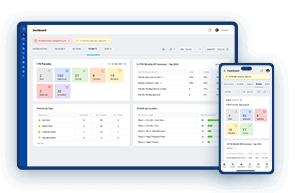
For example, a digital PTW workflow can prevent an isolation from being cleared while linked permits remain active. It can maintain a record of who applied, verified or removed an isolation and provide supervisors with visibility of active isolations during shift handovers.
This is particularly useful during shutdowns, contractor-heavy maintenance and SIMOPS, where the number of permits and dependencies can increase quickly.
Within a digital Permit to Work process, Safetymint can help teams maintain these connections so that isolation status remains visible alongside permit status rather than being managed as a separate administrative record.
Practical Checks Before Re-Energization
Before equipment is returned to service, the responsible team should be able to answer a few basic questions confidently:
- Have all jobs requiring this isolation been completed or suspended appropriately?
- Are all linked permits accounted for?
- Are personnel, tools and temporary equipment clear?
- Have guards and other protective systems been restored?
- Has authorization for de-isolation been obtained?
- Is the equipment being restored in the required sequence?
If any of these answers depends on finding the right person and asking what happened several hours earlier, the isolation process has a control gap.
Isolation Management Is a Lifecycle, Not a Permit Checkbox
The difficult part of isolation management is rarely recording that a valve has been closed or a breaker has been locked.
It is maintaining control when several jobs share the same equipment, work continues across shifts, and different teams finish at different times.
A well-designed Permit to Work process keeps that chain visible from the moment hazardous energy is isolated until the final authorization to restore it. No isolation should disappear from that chain simply because one permit has been closed.
This article was generated with the assistance of AI and reviewed by Ramesh Nair for accuracy and quality.