Hot Work Permit Procedures & OSHA Requirements
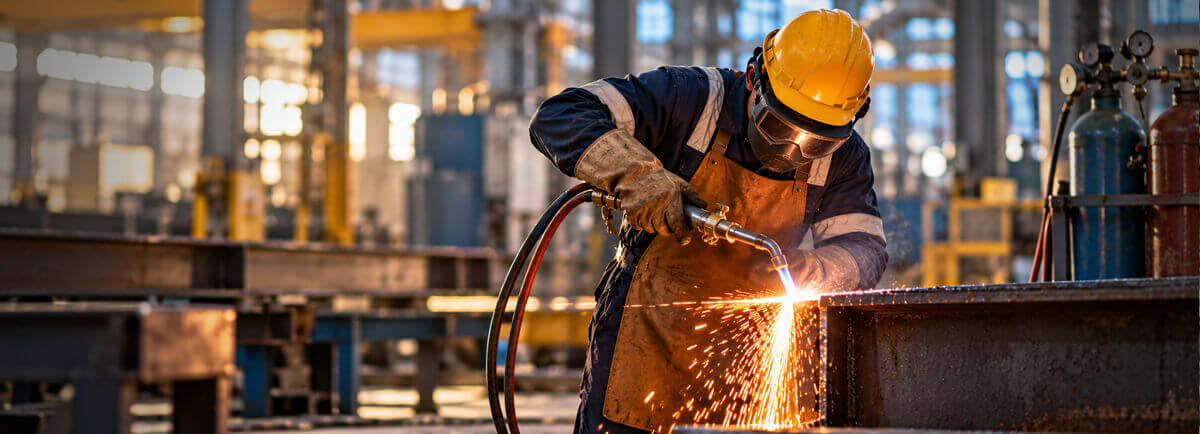
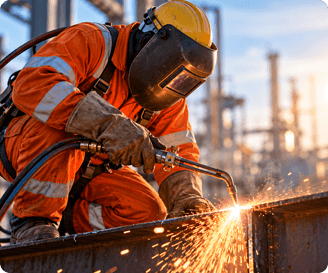
Welding a pipe, cutting through steel or using a grinder may be routine work. The risk changes when sparks, flame or heat meet combustible materials, flammable vapors or equipment that has not been properly isolated.
A hot work permit procedure is meant to catch these conditions before work starts. But what does OSHA actually require, when is a permit mandatory, and what should happen before someone strikes the first arc?
This guide looks at the OSHA requirements for hot work and how they translate into a practical permit process, from checking the work area through authorization, fire watch and final closeout.
When Does Hot Work Require a Permit?
OSHA’s rules on hot work depend on the type of workplace and the hazards involved. Under the Process Safety Management standard, 29 CFR 1910.119(k) requires a hot work permit when welding, cutting, brazing or similar spark-producing work is carried out on or near a covered process.
The permit must confirm that the fire prevention and protection requirements of 29 CFR 1910.252(a) have been addressed before work begins. It must also identify the object being worked on, state the dates for which the work is authorized, and remain on file until the job is complete.
Other OSHA standards may impose their own permit requirements. Grain handling facilities, for example, require permits for most hot work, with specific exceptions.
Even where a specific OSHA rule does not mandate a written permit, cutting or welding should not simply begin on verbal approval. Under 1910.252, the work area must be inspected by the person responsible for authorizing the job, appropriate precautions must be identified, and OSHA states that authorization should preferably take the form of a written permit.
Hot Work Permit Procedure: What Should Happen Before Work Starts?
A permit should begin with the job, not the form.
What work is being done? On which equipment? Could sparks fall to a lower level? Is there combustible material behind the wall being cut? Has the equipment contained a flammable substance? These questions determine the precautions that belong on the permit.
A practical pre-work check should cover:
- the exact work location and equipment involved
- combustible materials in and around the area
- nearby openings, ducts, floors and partitions
- fire extinguishing equipment
- ventilation
- atmospheric testing where the work presents a flammable atmosphere risk
- isolation of equipment where required
- the need for a fire watch
- other work taking place nearby
The person authorizing the work should inspect the area rather than approve the permit solely from information entered by the person requesting it.
Conditions can also change between permit approval and the start of work. If scaffolding has been moved, another contractor has entered the area or combustible material has been brought nearby, the original assessment may no longer be valid.
OSHA’s 35-Foot Rule Needs More Than a Tape Measure
The 35-foot requirement is one of the better-known parts of OSHA’s hot work rules. It is also easy to apply too mechanically.
Under 29 CFR 1910.252, movable fire hazards in the vicinity should be taken to a safe place. Where that is not practical, guards or other suitable measures must protect the hazard from heat, sparks and slag.
OSHA requires a fire watch where appreciable combustible material is within 35 feet of the work. A fire watch may also be necessary when combustible material is farther away but can still be readily ignited by sparks.
Distance is only part of the assessment.
Consider someone cutting steel beside an opening in a platform. Sparks can pass through the opening and reach material on the floor below. Heat can also travel through a metal wall or partition and ignite material on the other side.
The person issuing the permit therefore needs to look at where sparks and heat can travel, not simply what is sitting within a 35-foot radius.
When Is a Fire Watch Required?
Assigning a fire watch should follow the hazards identified during the inspection.
OSHA requires fire watchers in locations where welding or cutting is performed and certain conditions exist. These include appreciable combustible material within 35 feet, combustible material that can be ignited by sparks at a greater distance, nearby wall or floor openings exposing combustible material, and combustible material on the opposite side of metal partitions that could ignite through conduction or radiation.
The fire watch must have suitable fire-extinguishing equipment readily available and know how to use it. The person must watch for fires in exposed areas and attempt to extinguish them when this can be done safely. Otherwise, the alarm must be raised.
One detail needs care here. The often-quoted requirement to maintain a fire watch for at least 30 minutes after hot work is completed appears explicitly in OSHA’s shipyard rules. It should not be presented as a universal OSHA requirement applying identically to every workplace.
Site procedures may impose a post-work monitoring period based on the applicable standard, fire code, company requirements and the hazards of the job.
Atmospheric Testing and Isolation
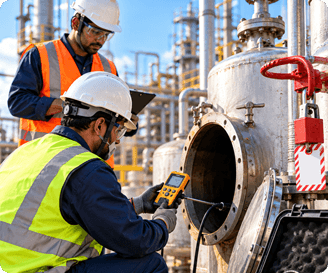
Hot work becomes considerably more hazardous when tanks, pipelines, vessels or process equipment are involved.
OSHA prohibits welding, cutting or other hot work on used drums, barrels, tanks or other containers until they have been cleaned thoroughly enough to ensure that flammable materials or substances capable of producing toxic or flammable vapors are absent. Connected pipes or lines must be disconnected or blanked where appropriate.
Atmospheric testing may also be necessary where flammable gases or vapors could be present. The permit should record the test result, location, time and person carrying out the test.
A single reading should not automatically be treated as valid for the entire job. If process conditions can change, the permit procedure needs to specify whether further or continuous testing is required.
Isolation deserves the same attention. A closed valve alone may not provide adequate protection for every hot work job. The isolation method should match the equipment, stored energy and process hazard involved.
Authorization Is the Start of Control
Once the precautions have been verified, the permit can be authorized for a defined period.
The authorization should make it clear what work is allowed, where it can take place and how long the approval remains valid. If the welder moves to another piece of equipment or a different area, the existing permit should not automatically travel with the job.
The same principle applies when conditions change.
Work should stop if a gas test moves outside acceptable limits, the fire watch leaves, required isolation is disturbed or a new activity creates a conflict. The permit can then be reassessed before work resumes.
This becomes especially important where several jobs are happening at the same time. A hot work permit may be acceptable on its own but unsafe when considered alongside nearby line breaking, chemical transfer or other simultaneous operations.
What Happens at Shift Change?
Shift handover is an easy place for permit controls to weaken.
The incoming crew should know which hot work remains active, what isolations are in place, whether atmospheric testing is required and who is acting as fire watch. Simply handing over the physical permit does not establish that these conditions are still understood or valid.
Depending on the site’s procedure, a permit may need revalidation, extension or fresh authorization before work continues into another shift.
The same applies to expired permits. Extending the validity time should involve checking the work area again rather than changing a date or time on an existing authorization.
Closing the Hot Work Permit
Putting down the welding torch does not necessarily mean the permit is ready to close.
The area should be inspected for signs of fire, smoldering material or heat that could cause delayed ignition. Temporary equipment should be dealt with appropriately, and the status of isolations must be confirmed.
Only then should the permit be formally closed.
For PSM-covered processes, OSHA requires the hot work permit to be kept on file until completion of the hot work operations.
A proper closeout also gives the site a clear record of who authorized the work, what precautions were applied and when the job was completed.
Where Hot Work Permit Procedures Commonly Break Down
Most weak permit systems do not fail because the form lacks another checkbox. Problems appear when the permit becomes disconnected from what is actually happening at the worksite.
A permit may be approved from an office without inspecting the area. Gas-test readings get copied forward. A job changes location while the same permit remains open. A fire watch is assigned on paper but given other duties that take attention away from the work. Permits are extended without checking whether conditions have changed.
Paper permits make some of these gaps harder to spot, particularly on sites running dozens of permits across different areas and shifts.
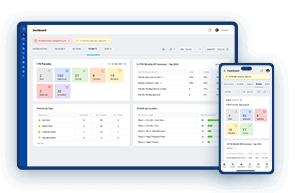
An electronic Permit to Work system can make specific controls harder to bypass. Required inspections, photographs, gas-test readings, isolations, fire-watch details and approval steps can form part of the permit workflow. Expiry, extension, suspension, shift handover and closeout can also be recorded rather than handled informally.
Safetymint’s ePTW system is designed around this type of workflow, allowing hot work permits to be managed alongside other active permits, isolations and simultaneous operations.
The value of the system still depends on what happens in the field. A well-designed hot work permit gives the person authorizing the job enough information to make a sound decision, and gives the crew clear conditions under which the work can safely proceed.
This article was generated with the assistance of AI and reviewed by Ramesh Nair for accuracy and quality.