Slips, Trips and Falls: Causes and Prevention
A wet floor, a loose cable or an uneven walkway might seem like a minor workplace hazard. Yet, any one of these can cause a serious injury, sometimes putting an employee out of work for weeks.
Slips, trips and falls are among the most common workplace accidents. Many occur in familiar surroundings, often because hazards have gone unnoticed or remained uncorrected.
Understanding what causes these accidents is the first step. Preventing them requires paying attention to everyday workplace conditions and addressing risks before someone gets hurt.
What Causes Slips, Trips and Falls at Work?
Although often grouped together, slips, trips and falls happen for different reasons. Understanding these differences helps identify the hazards that need attention.
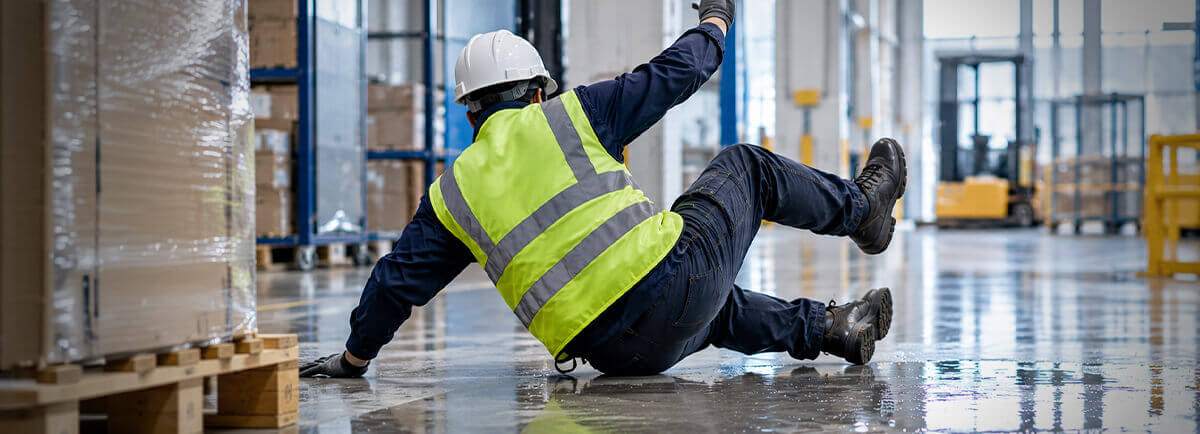
Slips occur when there isn’t enough grip between footwear and the walking surface. Wet floors, oil spills, loose mats and slippery flooring are common causes. Areas near entrances, washrooms and production equipment are particularly vulnerable.
Trips happen when a person’s foot strikes an obstacle or catches on an uneven surface. Trailing cables, damaged floor tiles, cluttered walkways and unexpected changes in floor level are typical examples. Poor lighting can make these hazards harder to spot.
Falls can occur on the same level, often following a slip or trip, or from a height. Falls from ladders, scaffolding, stairways and unprotected platforms can result in particularly severe injuries.
While the immediate causes may be obvious, the conditions that allow these hazards to develop and remain uncorrected deserve closer attention.
Why Do Slips, Trips and Falls Keep Happening?
Most workplaces have housekeeping rules, safety inspections and procedures for reporting hazards. So why do these accidents continue to occur?
One reason is that employees become accustomed to familiar hazards. A loose floor tile in a corridor may go unnoticed after a while. Workers learn to step around it, and eventually, nobody considers it worth reporting.
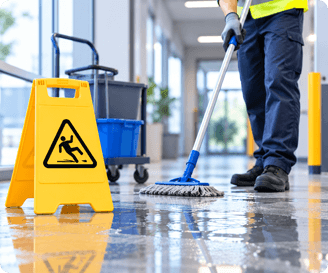
Temporary fixes can also become permanent arrangements. Consider a leaking pipe that leaves water on a factory floor. Someone places a warning sign and arranges for the water to be mopped up. The immediate danger is reduced, but the leak remains. By the next shift, the floor is wet again.
Other contributing factors include rushed work, inadequate lighting, poor maintenance and housekeeping responsibilities that aren’t clearly assigned.
Near misses are another missed opportunity. An employee who stumbles over a cable but manages to regain balance may simply continue working. Without reporting, the hazard remains for someone else to encounter.
These recurring conditions explain why prevention needs to extend beyond reminding employees to watch their step.
How to Prevent Slips, Trips and Falls in the Workplace
Effective prevention begins with identifying where people are likely to lose their footing and removing the conditions responsible.
Keep Walking Surfaces Safe
Floors should be maintained in good condition, with damaged tiles, uneven surfaces and loose coverings repaired promptly. In areas exposed to water, oil or other liquids, suitable slip-resistant flooring and drainage can reduce the risk.
Spills should be cleaned immediately, with warning signs used to alert employees while the hazard is being addressed. Where spills occur repeatedly, investigate the source rather than relying on cleaning alone.
Remove Obstacles from Walkways
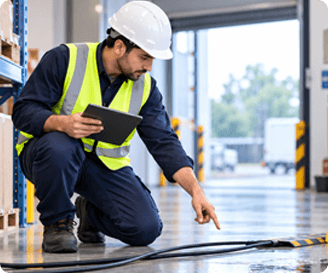
Cables, tools, packaging materials and other equipment should never obstruct designated walkways. Where cables must cross pedestrian routes, suitable cable protection or rerouting should be considered.
Storage areas also need attention. Materials left temporarily in corridors or near stairways can create unexpected trip hazards, particularly during busy shifts.
Make Stairs and Elevated Areas Safer
Stairways need adequate lighting, secure handrails and clearly visible step edges. Damaged or slippery steps should be repaired without delay.
Work at height requires additional precautions, including suitable access equipment, edge protection and properly maintained working platforms. Ladders should be selected and used only when appropriate for the task.
Choose Suitable Footwear
Footwear should match the conditions employees encounter. Slip-resistant soles can improve grip, particularly in kitchens, manufacturing facilities and areas where floors may become wet.
However, footwear alone cannot compensate for badly maintained walking surfaces or unsafe working conditions.
Spotting Hazards Before Someone Gets Hurt
Workplace inspections are useful for identifying slip, trip and fall hazards, but their effectiveness depends on what inspectors look for and what happens afterward.
A routine inspection might confirm that walkways are clear. A more useful assessment also considers whether conditions change during operations.
For example, does water accumulate near the loading bay during rainfall? Are electrical cables laid across walkways during maintenance? Does poor lighting make a staircase difficult to navigate during night shifts?
These conditions may not be visible during a scheduled morning inspection.
Employees who regularly use these areas are often best placed to identify such problems. Encouraging them to report unsafe conditions and near misses can reveal hazards that formal inspections overlook.
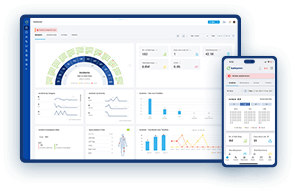
Using a digital inspection system, such as Safetymint’s safety inspection software, can help organizations document observations, assign corrective actions and maintain a record of recurring hazards.
Turning Hazard Reports into Preventive Action
Identifying a hazard is useful only when something is done about it.
Consider an employee who reports a damaged floor tile. The maintenance team receives the complaint, but the repair is delayed. Two weeks later, another employee trips over the same tile.
The problem was known, but the corrective action wasn’t completed.
A reliable hazard management process should establish who is responsible for resolving each issue, when the work must be completed and how the correction will be verified.
For recurring incidents, organizations should also investigate why earlier measures failed. Replacing a warning sign or repeating a housekeeping instruction may achieve little if the underlying problem remains.
Safetymint’s incident management software can help safety teams record incidents and near misses, investigate their causes and track corrective actions through to closure. Combined with regular inspections, this provides better visibility into hazards that might otherwise remain unresolved.
Making Slip, Trip and Fall Prevention Part of Everyday Work
Preventing slips, trips and falls doesn’t always require major changes or expensive equipment. Often, the most useful improvements come from addressing familiar problems that have been overlooked for too long.
Supervisors should pay particular attention to recurring spills, temporary work arrangements, damaged walking surfaces and areas where pedestrians share space with equipment or stored materials.
Employees also need a straightforward way to report hazards without waiting for the next scheduled inspection.
A workplace that takes these reports seriously is more likely to correct problems before they result in injuries. The objective is to make safe walking conditions part of normal operations, rather than something addressed only after an accident.
Slips, trips and falls may be common workplace incidents, but many of their causes are identifiable and preventable. The sooner hazards are corrected, the less opportunity there is for an ordinary working day to end in an avoidable injury.
This article was generated with the assistance of AI and reviewed by Ben Johnson for accuracy and quality.