Shift Handover in PTW Process: A Critical Link in Safety
Every shift change in a high-risk workplace feels like a handoff in a relay race. One crew is tired and ready to clock out, the next one is still shaking off the morning coffee. Yet in between those two moments sits something fragile: safety. Machines don’t pause for shift bells, and hazards don’t care that it’s someone else’s turn. The permit to work (PTW) process is supposed to cover this gap, but only if the handover itself is taken seriously.
I’ve come across plenty of stories where that link snapped. A hot job left unflagged, an isolation forgotten, or a gas test assumed to be still valid. Each one started with the same phrase: “We thought the next shift knew.” That’s why a permit isn’t just paperwork. It’s a live record of what’s going on and who’s holding the responsibility at any given time. Miss the handover, and you miss the thread that keeps work under control.
What Exactly Is Shift Handover in PTW?
Put simply, it’s the point where one team formally hands over the details of an active permit to the incoming team. Not just a casual nod, but a structured update: what’s been done, what’s still ongoing, and what hazards are currently locked down.
Unlike closing a permit, which means the job is finished, handover is about continuity. A welding job in a refinery doesn’t stop just because the sun sets. The permit is still live, and the worksite still carries risks. But the faces overseeing it change. That’s where the handover comes in: making sure nothing slips between the cracks.
Usually, this involves the outgoing supervisor, the incoming one, the permit issuer, and sometimes the control room. Each has to confirm they’re on the same page. When that step is skipped or rushed, history shows what happens: confusion, gaps, and in the worst cases, accidents.
Why Shift Handover Matters More Than Most People Think
Ask any seasoned operator and you’ll hear a version of the same line: “Accidents don’t usually come from unknown risks. They come from the things we forgot to mention.” And that’s exactly where shift handover earns its place.
Too often, the process is treated like a quick chat in the locker room. A few hurried sentences, maybe a scribbled note, and the outgoing team is gone. But what about the suspended permit that hasn’t been closed? Or the confined space job where testing was due again at midnight? Those details matter.
Regulators know it too. In industries like oil and gas, petrochemicals, and heavy construction, audits frequently check for handover records. They’ve seen enough cases where inadequate communication was the missing piece in an incident investigation. And while fatigue, distraction, or even optimism (“they’ll figure it out”) play a role, the result is the same: unnecessary risk.
The Building Blocks of a Good Handover

Not every handover has to be lengthy, but it does need to be structured. The essentials usually include:
- Permit status: Open, closed, suspended, or needing renewal.
- Active hazards and controls: Isolations in place, gas levels, barricades, lockout tags.
- Special conditions: Hot work still active, multiple jobs overlapping, or confined space entry.
- Work progress: What’s been completed and what’s still pending.
- Responsibility confirmed: Who is now in charge of overseeing controls.
When these points are covered, there’s less room for “I thought you knew.” Everyone leaves with clarity, not guesswork.
The Pitfalls That Keep Showing Up
Despite the obvious need, handover is often where corners are cut. A few common slip-ups I’ve seen or heard about:
- Verbal-only updates with no record.
- Forms filled halfway, or not at all.
- Outgoing supervisors rushing because they’re late for transport.
- Workers kept in the dark because the handover only happened between supervisors.
- Suspended permits left hanging without clarity.
Each of these feels minor in the moment, but add them up and you’ve got a recipe for failure. It’s usually not malicious, just human. But safety doesn’t forgive assumptions.
Making Handovers Stronger: Best Practices

So what makes the difference between a half-hearted handover and a strong one? A few practices stand out:
- Use a checklist. Sounds basic, but it works. A standard format prevents memory gaps.
- Do joint walkthroughs for high-risk jobs. Two sets of eyes catch more than one.
- Keep a logbook (digital or paper) so there’s a trail. If something goes wrong, you can trace back what was said and signed.
- Both parties sign off. It’s not just the outgoing supervisor’s job.
- Include the crew. If workers don’t hear about the hazards directly, they’re left piecing it together on site.
It’s these small habits that turn handover into a reliable safeguard rather than a rushed routine.
How Digital PTW Systems Help
Paper systems have their limits. A missing sheet, smudged handwriting, or simply forgetting where the logbook was left — all common. Digital PTW systems solve many of those headaches.
With a proper system in place:
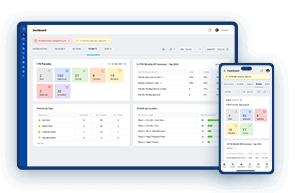
- All active permits show up on a dashboard.
- Alerts flag permits nearing shift end.
- Digital sign-offs capture accountability with time stamps.
- Audit trails become automatic, not an afterthought.
- Handover can’t be skipped because the system won’t allow it.
Instead of relying on memory or scraps of paper, incoming supervisors log in and see exactly what’s live, what’s pending, and what needs attention. It makes the process faster and safer.
Practical Steps for Organizations
If you’re looking to tighten up shift handovers, a few starting points can make a real difference:
- Bake handover into your PTW policy — no exceptions.
- Tie handovers to toolbox talks, so the entire team hears the update.
- Run audits on handovers, not just on permits themselves.
- Configure your digital PTW system to make handover steps mandatory.
- Train supervisors (and remind them regularly) that a skipped handover is a safety gap, not a time saver.
These steps aren’t about adding paperwork. They’re about making sure the system works as intended, even when people are tired or pressed for time.
This article was generated with the assistance of AI and reviewed by Ramesh Nair for accuracy and quality.