Eliminating Data Silos: Why Your Safety and HR Data Should Talk
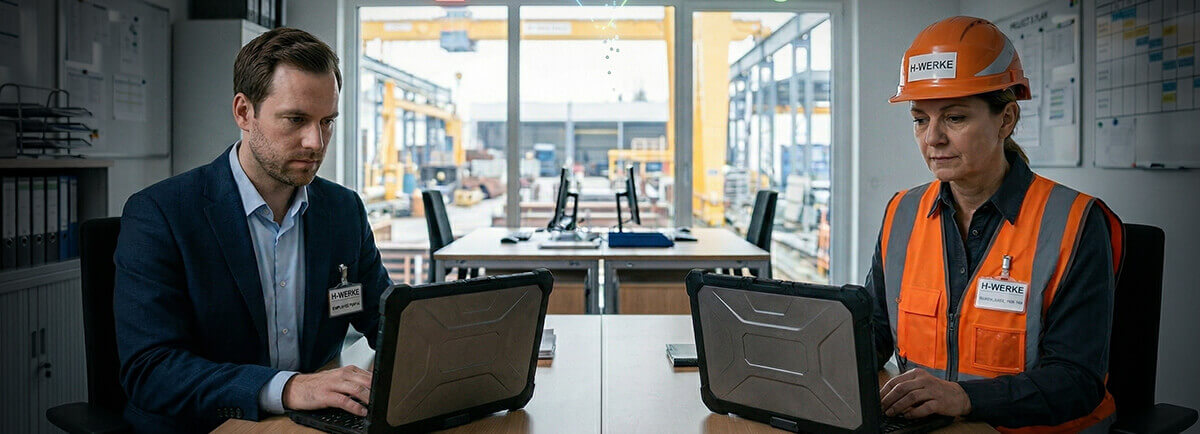
A technician gets assigned to a high-risk inspection.
On paper, everything looks fine. He’s active in the HR system, cleared for work, and scheduled for the job.
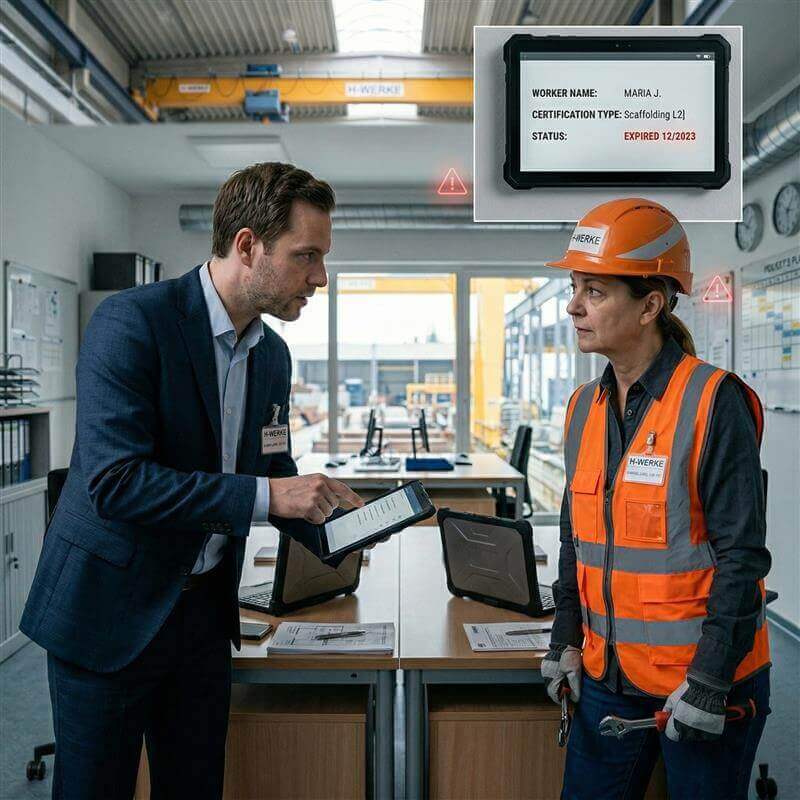
What no one notices is this: his certification expired yesterday.
No alerts. No flags. Just two systems that never checked with each other.
This is how risk creeps in. Not through negligence, but through silence between systems.
In most organizations, safety and HR data live in separate worlds. Training records sit in one place. Inspections, permits, and incident logs sit somewhere else. The connection between them is often manual, and sometimes completely missing.
It feels manageable. Until it isn’t.
The Cost of the Great Divide
At first, the separation doesn’t look like a serious problem. Teams get used to it.
HR updates training records. Safety teams maintain their own lists of who is authorized to do what. Both assume the other side is current.
That assumption is where things start to slip.
The inefficiency
Most of the damage here is quiet.
People spend time entering the same data in multiple places. Lists are exported, edited, and re-uploaded. Someone forgets to update one system, and now there are two versions of the truth.
It doesn’t break anything immediately. It just makes everything slightly unreliable.
And when systems are slightly unreliable, people stop trusting them.
The risk
Now put that into a real workday.
A worker is assigned to a task they were certified for last month, but not anymore. The list looked correct, but it wasn’t updated.
A contractor walks in and starts work without completing safety induction because onboarding and safety workflows weren’t connected.
An employee finishes a long stretch of overtime and still gets assigned to another high-risk task the next morning. No one had visibility into both schedules and safety exposure at the same time.
None of this is unusual. It’s just what happens when systems operate in isolation.
Shared Data Points: Where HR and Safety Meet
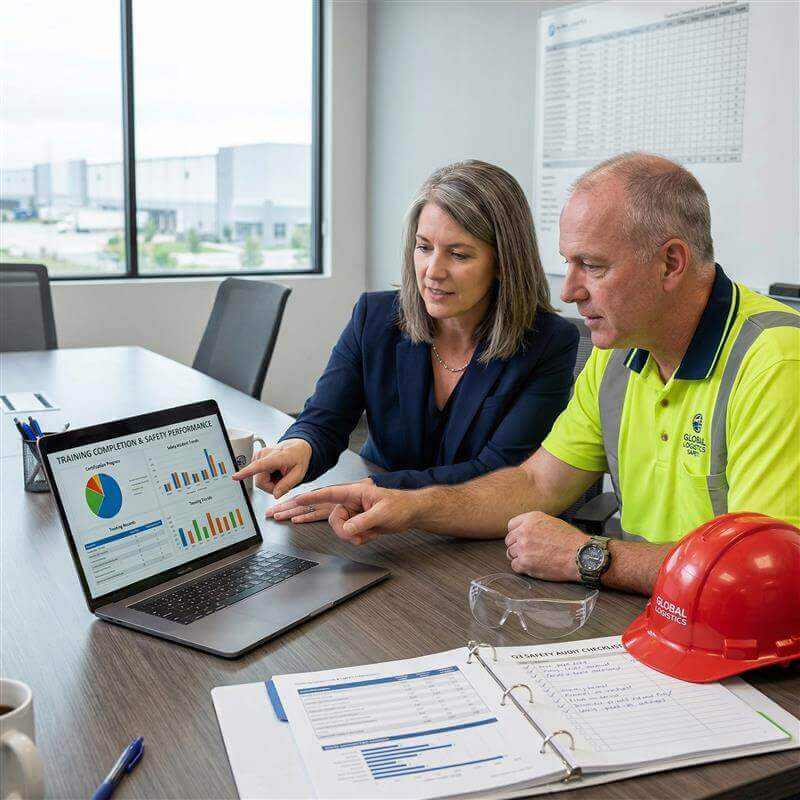
The interesting part is that HR and safety are already deeply connected. Just not in the systems.
If you step back and look at daily operations, the overlap is constant.
Training and competency
HR tracks training completion. That’s their domain.
But safety teams depend on that same data to decide who is allowed to perform specific tasks. Whether it’s working at height, confined space entry, or operating equipment, everything comes back to competency.
If those records aren’t synced in real time, your “authorized personnel” list is always slightly outdated. And that’s a risky place to operate from.
Occupational health
HR holds information that safety teams rarely see in full.
Medical leave. Health check-ups. Fitness-to-work clearances.
Safety, on the other hand, tracks incidents, near misses, and exposure trends.
Now imagine looking at both together.
You might start to notice that certain incidents occur more frequently after long absences. Or that specific roles are more affected by underlying health issues.
These are not obvious patterns. They only show up when the data is connected.
Onboarding
This is where things should be seamless, but often aren’t.
A new employee gets added to the HR system. From that moment, several safety actions should follow automatically.
They should be assigned safety orientation. Their training requirements should be defined. Access to high-risk tasks should be restricted until they’re fully cleared.
In many organizations, this still happens manually. Which means it’s inconsistent.
Predictive Safety Through Integrated Data
There’s a tendency to overcomplicate this part. Talk of AI, predictive engines, advanced analytics.
In reality, most teams don’t need any of that to start seeing value.
They just need their data in one place.
Fatigue and overtime
HR systems already track working hours. Overtime, shift patterns, attendance.
Safety systems track incidents and near misses.
Put those two together, and a simple question becomes possible: are incidents more likely after extended working hours?
In many environments, the answer is yes. But without integrated data, that connection stays hidden.
Behavioral patterns
Some teams experience higher turnover. Others rely heavily on temporary workers. Some shifts are more stable than others.
Now layer that with safety data.
You might notice that teams with frequent changes also show lower inspection quality. Or that certain shifts consistently report more incidents.
It’s not always a direct cause-and-effect. But it’s enough to guide better decisions.
Moving from reactive to aware
Most safety programs respond after something happens. An incident occurs, and then it gets investigated.
When data is connected, you start seeing patterns earlier.
Not perfectly. Not with certainty. But enough to act before small issues turn into bigger ones.
That shift alone makes a difference.
Breaking the Silos: Practical Steps That Work
This is where many organizations overthink things.
You don’t need a massive transformation to fix this. You just need to start connecting the right pieces.
1. Enable system connectivity
Your safety system should be able to communicate with your HR platform.
That usually means API-based integration. Employee records, training status, and role information should flow automatically between systems.
Solutions like Safetymint are designed to support this kind of integration, so teams don’t have to rely on manual updates to keep things aligned.
2. Create unified visibility
Think about the person making decisions on the ground. A supervisor assigning work doesn’t have time to check multiple systems.
They need a clear, simple view.
Is this worker trained?
Is their certification valid?
Are there any recent incidents or restrictions?
When all of that sits in one place, decisions become faster and safer.
3. Align teams, not just systems
Technology helps, but it doesn’t replace conversation.
HR and safety teams often operate in parallel without regular interaction. That needs to change.
A simple monthly check-in can go a long way. Reviewing training gaps, recent incidents, and workforce changes together often surfaces issues that no system would highlight on its own.
The Business Outcome
Once the silos start breaking down, the impact becomes visible fairly quickly.
Compliance becomes easier to manage
Audits feel different.
Instead of scrambling to gather records, teams already have everything connected. Training, certifications, and task assignments all line up.
There’s less chasing, and fewer last-minute surprises.
Risk becomes clearer
When workforce data and safety data are viewed together, patterns start to make sense.
You can identify which teams need attention. Which shifts carry higher risk. Where interventions are actually needed.
It doesn’t eliminate risk, but it makes it easier to understand and manage.
Employees feel the difference
This part is often overlooked.
When workers see that training is tracked properly, and that task assignments reflect their actual readiness, it builds trust.
It shows that safety isn’t just a policy. It’s something the organization is paying attention to in a consistent way.
When safety and HR data finally start working together, nothing feels dramatically different overnight. But the gaps begin to close, the guesswork reduces, and the kinds of incidents that used to “just happen” start becoming far less common.
This article was generated with the assistance of AI and reviewed by Ramesh Nair for accuracy and quality.