Most Construction Accidents Give You a Warning. Here’s How to Notice It.
A scaffold doesn’t suddenly become unstable. An excavation doesn’t collapse without warning. Most construction accidents leave clues long before anyone gets hurt.
A loose guardrail, a recurring near miss, poor housekeeping, or a shortcut that slowly becomes routine may not seem alarming on their own. Together, they create the conditions for an incident.
The best site supervisors don’t just identify hazards. They notice the small changes that others overlook. That’s often the difference between preventing an accident and investigating one.
Why We Miss Hazards That Are Right in Front of Us
Most hazards aren’t hidden. They’re simply overlooked.
Walk onto a busy construction site and you’ll notice workers moving materials, equipment operating, deliveries arriving, and multiple trades working side by side. When you’re focused on keeping the project moving, it’s surprisingly easy to stop noticing gradual changes around you.

Familiarity is one of the biggest reasons hazards go unnoticed. A damaged access ladder that’s been there for weeks starts to look normal. Extension cables across a walkway become part of the background. A temporary barricade remains in place because everyone assumes someone else is dealing with it.
Time pressure makes things worse. Small warning signs are often dismissed with the intention of fixing them later. Unfortunately, later sometimes comes after an incident.
Recognizing hazards isn’t about having sharper eyesight. It’s about asking a different question: What’s changed today?
Five Warning Signs That Deserve Your Attention
Most serious incidents are preceded by small warning signs. On their own, they may not seem significant. When several appear together, they deserve immediate attention.
| Warning Sign | What It Could Mean |
| Workers taking shortcuts | The task may be difficult, unclear, or poorly planned. |
| Repeated near misses | Existing controls are no longer effective. |
| Poor housekeeping | The work area is becoming harder to manage safely. |
| Temporary repairs remaining in place | Maintenance issues are being postponed. |
| Workers expressing hesitation | There may be an unaddressed hazard or lack of confidence. |
These aren’t accidents waiting to happen. They’re opportunities to prevent one.
Learn to Read the Site, Not Just the Checklist
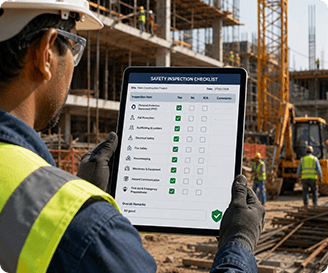
Inspections become far more effective when you look beyond the checklist.
Instead of focusing only on whether an item passes or fails, pay attention to what feels different. Has a work area become more cluttered? Are workers using equipment differently? Is a task taking longer than expected?
A useful site walk often starts with a few simple questions.
- What has changed since yesterday?
- Does anything look out of place?
- Are people working differently than planned?
- Has a temporary arrangement quietly become permanent?
The answers often reveal risks that standard inspections can miss.
Hazards Often Begin Before Work Starts
Many construction hazards are introduced long before the first tool is picked up.
A rushed schedule, overlapping contractors, unclear responsibilities, changing weather, or an incomplete permit can all increase risk before work even begins.
That’s why planning meetings, toolbox talks, and pre-task risk assessments matter. They create an opportunity to identify changing conditions and agree on controls before workers are exposed to them.
The safest jobs usually begin with the fewest surprises.
Train Yourself to Notice the Small Things
Experienced supervisors don’t inspect more areas than everyone else. They simply notice more.
A ladder isn’t just checked for damage. They look at where it’s positioned, whether the ground is stable, if workers are overreaching, and whether the landing area is clear.
The same applies to scaffolds, excavations, lifting operations, and electrical work. Small details often tell a much bigger story about the level of risk on site.
With practice, spotting these weak signals becomes a habit rather than a checklist exercise.
Encourage Workers to Report Weak Signals
The people doing the job are often the first to notice when something isn’t right.
A machine that sounds different. A missing barrier. A lifting activity that feels awkward. These observations may not stop work immediately, but they shouldn’t be ignored.
Creating a culture where workers report unsafe conditions and near misses without hesitation gives safety teams valuable information before someone gets injured.
Every observation is another chance to intervene early.
Connect the Dots Before an Incident Does
A single hazard report rarely tells the whole story. Patterns do.
Several housekeeping observations across different work areas may point to poor planning. Multiple near misses involving lifting equipment may indicate a training gap. Recurring corrective actions that remain open could suggest deeper operational issues.
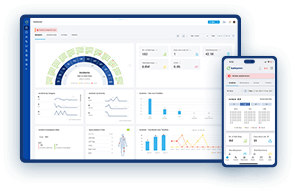
This is where digital safety systems provide real value. Instead of scattered paper records, inspections, hazard observations, near misses, incidents, and corrective actions are captured in one place. Trends become easier to identify, responsibilities are clearer, and follow-up becomes more consistent.
Platforms like Safetymint help safety teams move beyond reacting to incidents. By bringing together inspections, observations, investigations, and corrective actions, they make it easier to identify recurring risks and act before they result in injuries or project delays.
The goal isn’t to collect more reports. It’s to recognise patterns early enough to prevent the next incident.
Construction sites are constantly changing, and so are the hazards that come with them. The warning signs are usually there. The challenge is learning to recognise them before they become part of an incident investigation. That’s one of the most valuable skills any supervisor, engineer, or safety professional can develop.
This article was generated with the assistance of AI and reviewed by Ben Johnson for accuracy and quality.